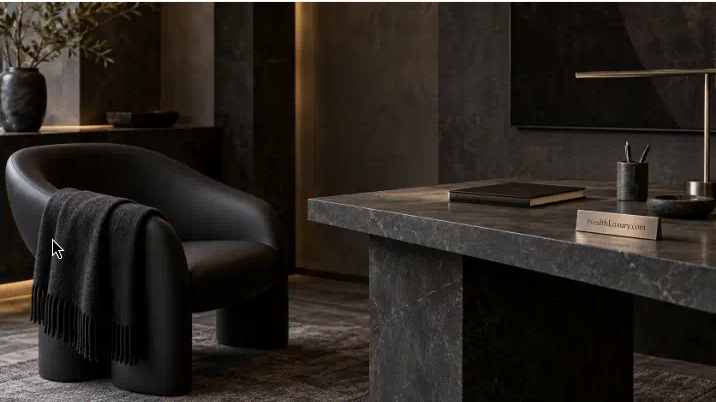
StealthLuxury.com could serve as the public name for a privacy-first home studio: residential design for clients who want low visibility. This concept is about site visits, material palettes, and portfolio presentation that protects addresses. It is not a fashion label, club, or travel desk.
Illustrative only. This page does not imply licensed architecture where it is not held. Local licensing, permitting, and professional credentials remain the operator’s responsibility.
Buyer and project type
The buyer is a design practice (interior, renovation leadership, or a multidisciplinary studio with proper credentials) serving clients who do not want their homes turned into content. The first offer can be a discovery and programming engagement: understand the household, privacy constraints, and material priorities before a full scope.
Inquire notes should include project type and region. A serious message names renovation versus new build, approximate scale, and whether press is ever allowed. Vague “luxury interiors” notes waste time.
Why the name fits this use
StealthLuxury.com fits a privacy-first residential practice because the phrase sets expectations for how the studio behaves in public. Clients hear discretion. That helps the studio refuse address reveals, drone flyovers without consent, and before/after posts that identify the property too clearly.
Compared with fashion, the “collection” is a home and a material story. Compared with membership, the relationship is project-based. Compared with travel, the site is fixed and the privacy risk is local. The domain can hold the studio identity while project codes stay internal.
Design media often debates how much of a private residence should appear online. For craft and materials culture, publications such as Architectural Digest show how spaces can be discussed with varying levels of identifying detail. Use those examples as craft references, not as permission to publish a client’s address.
Site-visit protocol
Privacy starts before the first measurement. A practical protocol:
- Confirm who may attend and whether photography is allowed on day one.
- Store addresses and access instructions in a least-privilege system.
- Brief contractors on no-public-posting rules for the property.
- Separate marketing shoots from technical documentation shoots.
- Get written approval for any public stills, including crops that could reveal location.
Staff and vendors are part of the privacy surface. A single careless Instagram story can undo months of trust. Treat that as an operations issue, not a branding afterthought. The Resources post on client discretion ops applies here.
Material palette and portfolio presentation
Quiet luxury in residential work often shows up as material honesty: stone, timber, soft textiles, restrained metal. Portfolio pages can lead with those details and spatial sequences without publishing street numbers or facade shots that make the home easy to find.
Illustrative example: a studio relaunches at StealthLuxury.com with case studies titled by material theme rather than neighborhood. Hero images show thresholds, cabinetry grain, and daylight studies. Faces of the household do not appear. A note explains that locations are withheld by client request. Inquire invites project type and region only.
What execution would require
- Correct licensing for the services offered in each jurisdiction.
- Contracts that cover photography rights and confidentiality.
- A file system that separates public marketing assets from private drawings.
- Vendor onboarding that includes privacy expectations.
- A public site that sells craft without doxxing clients.
Distribution can rely on referrals from builders, family offices, and previous clients. Public content can teach process (how a site visit works, how material boards are reviewed) without turning private homes into spectacles.
How the studio talks in public
A privacy-first studio still needs a public voice. Teach process: how programming meetings run, how material boards are reviewed, how daylight is studied, how contractors are briefed. Those topics sell craft without identifying a household. Avoid neighborhood name-dropping as a status move. Avoid drone hero shots that make a property trivial to locate.
When a client does approve a case study, document the approval, the allowed crops, and the embargo date. Store that with the project files. Junior staff should not guess. The same discipline belongs on paid media: if the ad creative shows an identifiable facade, treat it as a publish decision, not a leftover from the art folder.
StealthLuxury.com can host that voice as a calm studio address. The inquire form collects project type and region. The portfolio withholds what it must. That combination is the product of the concept: discretion as an operating system, not as a caption.
Risks and next step
Risks include implying credentials you do not hold, publishing identifiable exteriors by habit, and using a discreet name while running loud location-tagged ads. Another risk is treating privacy as optional for “portfolio-worthy” projects. Decide the rule before the shoot.
If this is your week, inquire about StealthLuxury.com with project type and region. Buy paths use GoDaddy or Escrow.com. Partners should describe audience and roles. If you are still choosing among fashion, membership, and travel, compare those Ideas first, then inquire.
Inquire about StealthLuxury.com
Start a conversation about a privacy-first residential studio use.
Inquire now