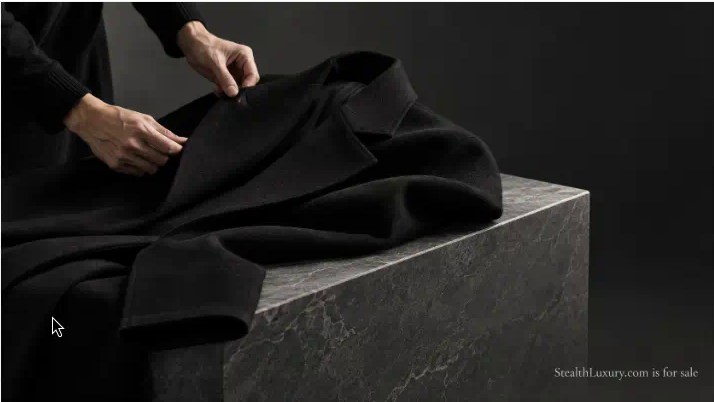
Faces sell quickly. They also create privacy problems, casting costs, and a sameness that fights quiet luxury. Many offers photograph better when materials, spaces, and hands-only service moments carry the story. This post is a practical shot list and production plan. Do not invent celebrity or location claims from these examples.
Decide why you are avoiding faces
Write the reason in the call sheet. Client privacy. Brand posture. Category norms. Budget. Each reason changes the rules. Privacy-driven jobs need stricter location and vendor controls. Posture-driven jobs can still use models in limited ways if the brief allows, but this guide assumes a no-face or faces-rare default.
Tell stakeholders early. If someone expects a celebrity-style hero, resolve that before the shoot day, not in the edit.
Shot list: materials
Materials are the quiet-luxury proof system. Shoot:
- Fabric hand and weave at true color.
- Stone, wood, and metal junctions.
- Hardware close-ups without logo worship.
- Wear and use details that are honest (a bent corner of a sample book, a chalk mark on a fitting).
- Packaging openings that show care, not confetti.
Light for texture. Soft side light often beats flat beauty lighting that erases the thing you came to show. Keep retouching from plasticizing materials. If the cashmere looks like vinyl, you lost.
Shot list: spaces
Spaces sell hospitality, travel desks, and residential studios. Shoot thresholds, corners, table settings, empty chairs before service, and daylight progressions. Avoid identifiable exteriors when privacy requires it. Avoid signage that locates a private property too easily.
For travel marketing, empty lounges and material details often outperform guest faces. For membership, tablescapes and service mise en place can imply care without publishing who attended.
Move the camera slower. Quiet luxury stills often fail because the set is rushed into a wide “lifestyle” grab that includes clutter and accidental faces in reflections.
Shot list: hands-only service moments
Hands can show craft without identity:
- Pouring, plating, pinning a garment, opening a door, placing a key card.
- Measuring, sampling stone, adjusting a shade.
- Packing a shipment with care notes visible.
Cast hands like you cast faces: clean nails appropriate to the offer, jewelry rules that match the brief, no distracting logos on watches unless intentional. Brief everyone on-set about reflections in mirrors and phones.
Production day workflow
- Call sheet includes face policy and location privacy notes.
- Vendor and crew NDA or written rules when needed.
- Hero stills first while light is best; B-roll details second.
- Immediate flagging of accidental identifying elements.
- Selects reviewed against the brief’s banned props list.
Build a reject pile for anything that breaks privacy or posture, even if it is pretty. Pretty is not the standard. Fit to brief is the standard.
Useful craft references on still-life and editorial lighting appear across photography education sites and magazines. Study technique. Do not copy someone else’s private residence and call it yours.
Campaign sequences that still feel human
No-face campaigns can feel cold if every frame is a sterile object on black. Build warmth through daylight, fabric compression, unfinished craft, and small human traces that do not identify a person: a hand at the edge of frame, a steam curl from a press, a chair pushed back after a fitting.
Storyboard a six-frame sequence for web and a three-frame sequence for paid. Test whether a stranger understands the offer without a face hero. If they cannot, the problem may be the offer clarity, not the missing portrait.
For service brands, include one process frame that teaches a step (measuring, packing, briefing a vendor). Process frames replace personality portraits when privacy is the product.
Editing and usage
Edit for sequence: wide space, mid material, tight detail, hands-only moment. That sequence gives designers a story without needing a face hero. Color grade for material honesty. Keep skin tones out of the conversation if faces are absent; spend that attention on cloth and stone.
Usage matrix: which frames may go paid, organic, press, or internal only. Privacy jobs need this matrix signed. Store it with the selects.
Budgeting a no-face production
People assume no-face means cheaper. Sometimes it is. Sometimes it costs more because materials, sets, and lighting must carry emotion. Budget for a strong still-life kit, fabric steamers, and time for detail passes. Cutting the model fee and also cutting set time produces empty frames.
Allocate retouching hours to texture cleanup, dust, and color honesty rather than skin work. Allocate a producer hour to privacy checks. Those line items look unusual on a classic fashion estimate and still belong here.
If the client later asks for a face campaign, price it as a separate job with consent workflow, rather than as a free add-on pulled from leftover frames.
When a face is actually required
Sometimes a face is the right tool: a founder letter, a documented artisan portrait with consent, a campaign that is explicitly personal. If you break the no-face default, document consent, crop rules, and where the image may appear. Do not let one exception become an unreviewed archive of identifiable people.
Art direction notes that keep stills from going flash
Without faces, teams sometimes compensate with glitter, supercars, or gold prop piles. Ban that compensation in the call sheet. Prefer graphite, stone, soft textile, brushed metal, and daylight. If a prop does not appear in the real offer, it should not appear in the hero.
Work with a short reference board of material and space frames only. Avoid celebrity campaign screenshots as “inspiration,” because they pull the set back toward faces and flash. Show the board to clients before the shoot so expectations match the no-face plan.
On set, assign one person to watch reflections and background strangers. Quiet luxury stills are often ruined by a mirrored face or a logo on a crew jacket. That role is cheap insurance.
After selects, write three sentences of caption guidance that describe craft, not invented exclusivity. Captions are part of photography systems. A restrained frame with hype caption language still fails the brief.
Use the shot list next production day
Print the materials, spaces, and hands lists. Assign owners. Review the first ten frames against the quiet-luxury brief checklist if you have one. If the set starts drifting toward flash habits, stop and re-read the refusal sentence from your brief.
Pair this with operational habits that protect client discretion so the gallery does not leak through vendor stories the same night. Restraint is a production system, not a filter preset.